
“Wine's Moment of Truth: It's Time to Reinvent.” Or is it?
This title from a New Year’s Day post preempts wine’s precarious position with creative ideas for growth. Rather than the usual gloom and doom, Wine Business Monthly highlights opportunities, like focus on storytelling, wine tourism, enriching experiences, and dynamic collaborations. Lead with “personality, storytelling, and cultural relevance” advises a second, likeminded article. Authors Susan Kostrzewa and Barbara Gorder site partnerships between Kendall Jackson and the WBNA and rapper Rick Ross and his favorite bubbles.
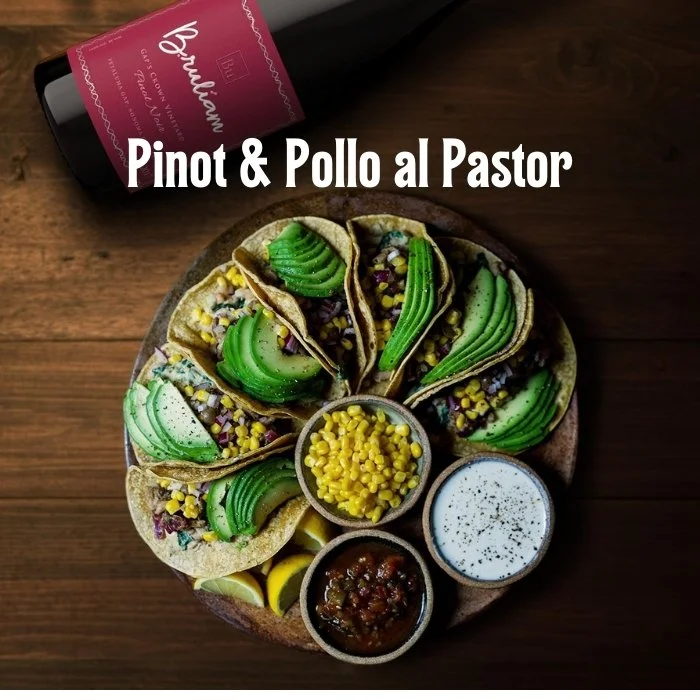
The McBride sisters’ website showcases global flavors, expanding our big wine tent, which is always a good thing. If wine lovers are drinking less but drinking better, the opportunities for us wineries to vie for your favor are endless. Like you, I look forward to creative marketing campaigns from the big brands with big pocketbooks. Hopefully, everyone leans into the fun and community wine inspires.
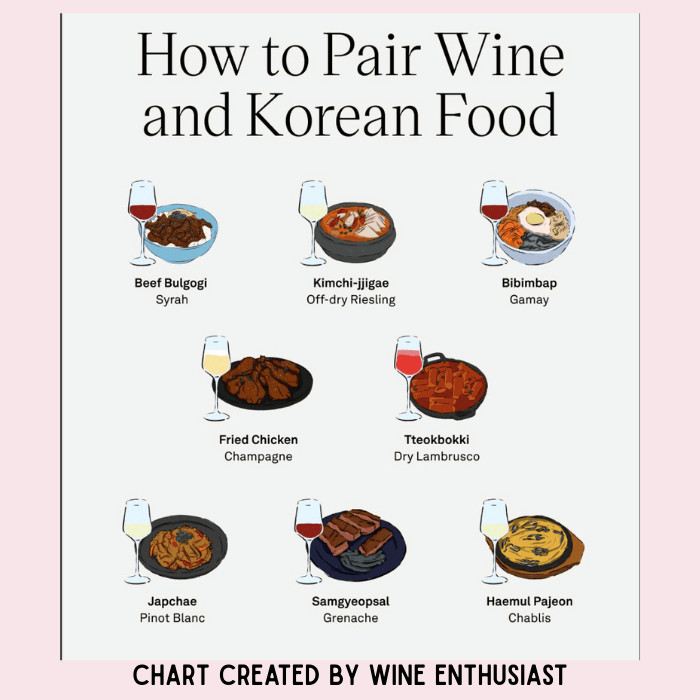
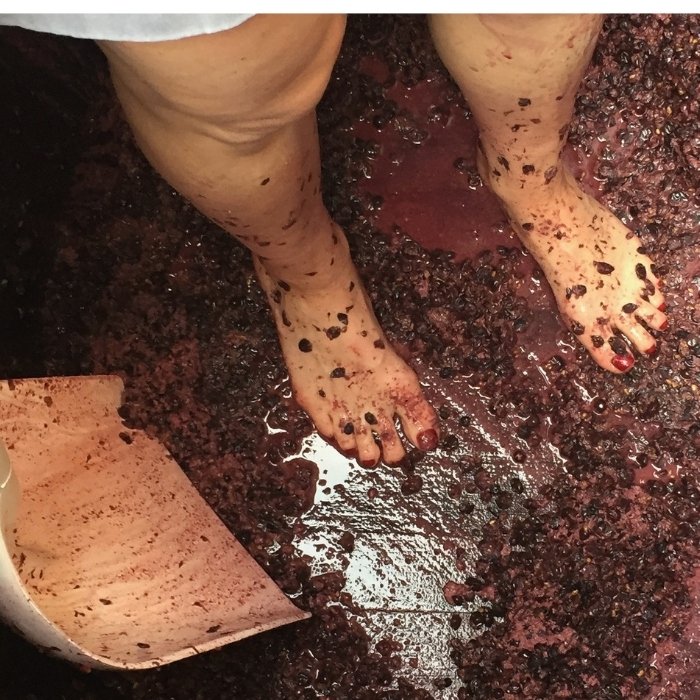
Despite the rosy tone, the authors peppered warnings. “Know your audience.” Speak plainly to “avoid alienation.” In other words, cool it with the insider baseball wine lingo. Delestage? Exit stage left. And leave pigeage to the pigeons. Furthermore avoid imagery that is “too perfect.” The authors exhort the relatable “magic of slightly messy.” Is she talking about my feet?
keep calm & carry on
Despite some generally good vibes, Janics Robinson’s recent article in the Financial Times reincarnated as a dire headline on her website: “Shadows over Northern California.” The main gist of her article is that Napa has grown unaffordable. A 90 minute “Martha’s Vineyard Legacy at the Estate” tasting at Heitz Cellars sets you back $300 per person. In response, lauded grower Stu Smith of Smith Madrone Wines labels the current zeitgeist “a shit show. Prices have been way ahead of quality and that’s biting everyone on the behind. The biggest issue for our industry is that prices are too high.”
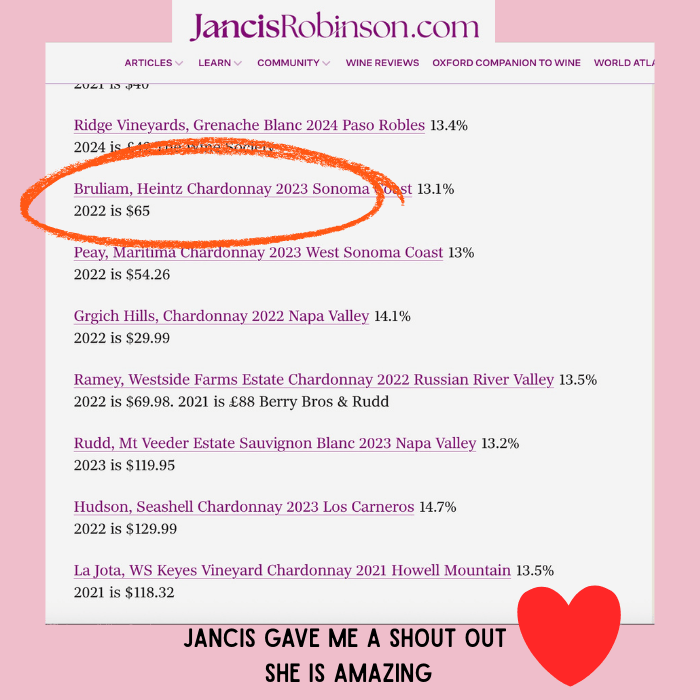
To counter the bad vibes, Jancis offers a brilliant list of “exciting” wines tasted on her recent trip to NorCal, all alternatives to pricey Napa cabs. Of course, her list is genius. She shouts out my chardonnay.

My fan girl moment. Selfie with renowned wine writer Jancis Robinson.
Journalist Erica Duecy is all in on rose
According to a recent article in Forbes, “premium rose” is a bright spot.
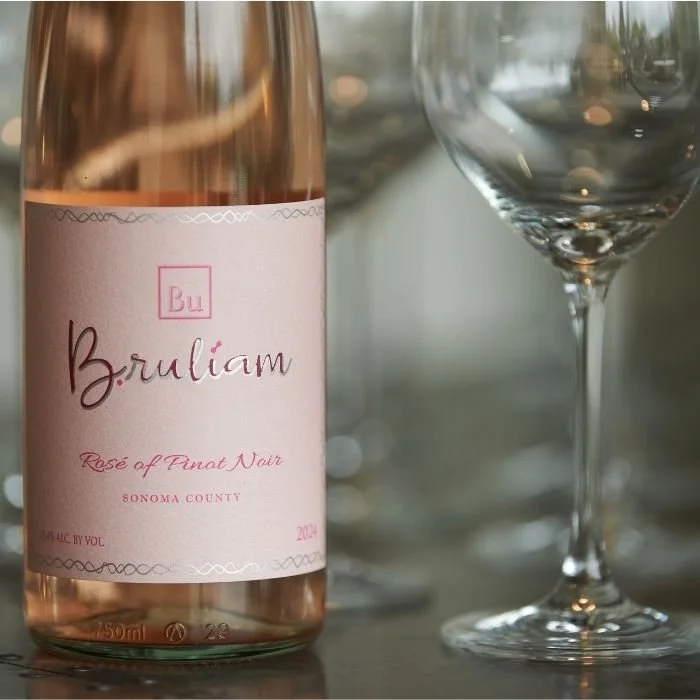
The author notes that “rosé is no longer viewed as a cheap, seasonal wine, but as a lifestyle signal built around provenance, design, and emotion…Pale hues, elegant packaging, and strong place-based storytelling — the Hamptons, the South of France — carry cultural weight.” I’m always delighted when rose gets year-round love. Rose is great in the summertime and winter, too. Really.
a quirky pairing that works
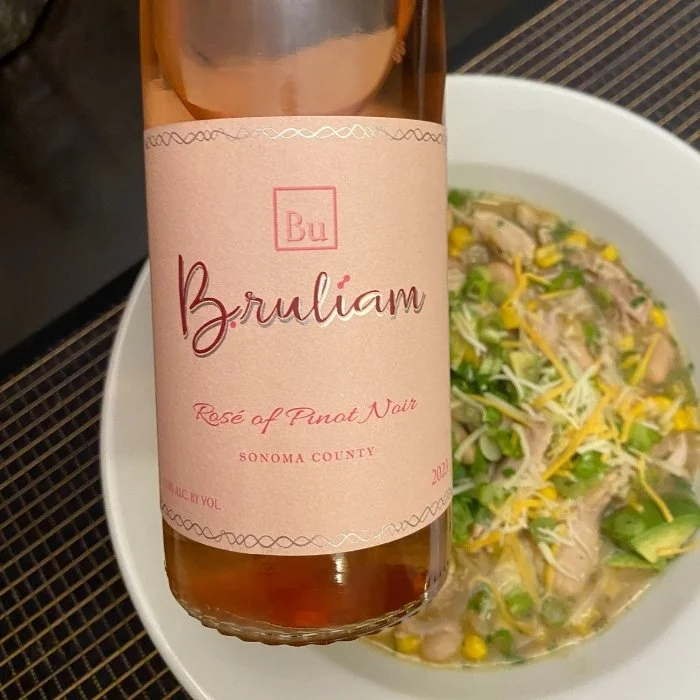
Those who know me well can attest to my one-woman campaign to make rose & chicken noodle soup a standard food/wine pairing. (If you haven’t tried, please do. It works!).
Which Brings Me to a Mind-Boggling Moment
Meet Napa’s newest rose brand, Abloom, which retails for $150/bottle.
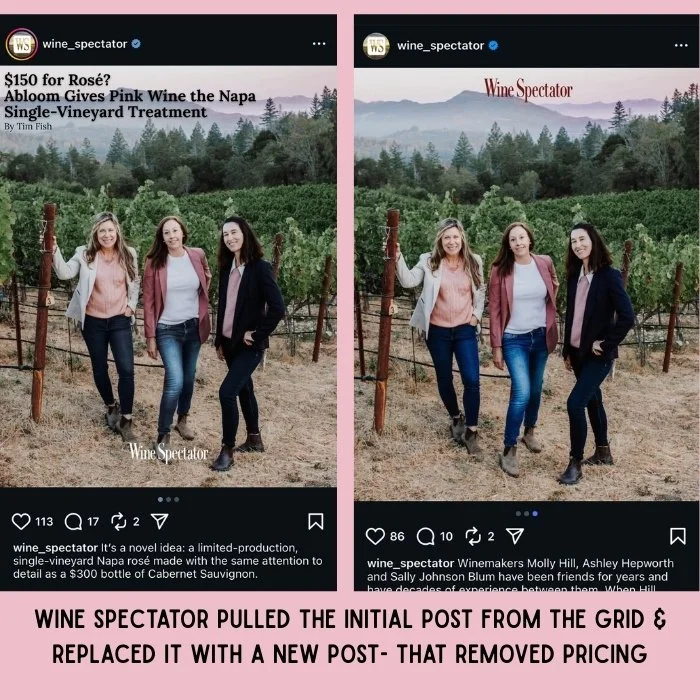
Yup, you read it right. And in the spirit of Megan Markle’s inaugural release, you can only purchase Abloom rose as a 3-pack. No words. Well, fine- some words. Do you know what is wrong with the wine industry today? WE are what’s wrong with the wine industry today. The brand’s founders are gleefully embracing the blowback from their eye-watering prices. They post links to articles including Tim Fish’s in Wine Spectator, where he asks “how the rosé is made the same way as $300 cabernet sauvignons.” Except it’s not a $300 Napa cab. It’s a rose of grenache. Count me bamboozled. I haven’t let this story go since I read the headline in October. This got me thinking about rose pricing and the unaffordability of good wine, at least here in the US.
speaking from experience (aka dont try this at home)
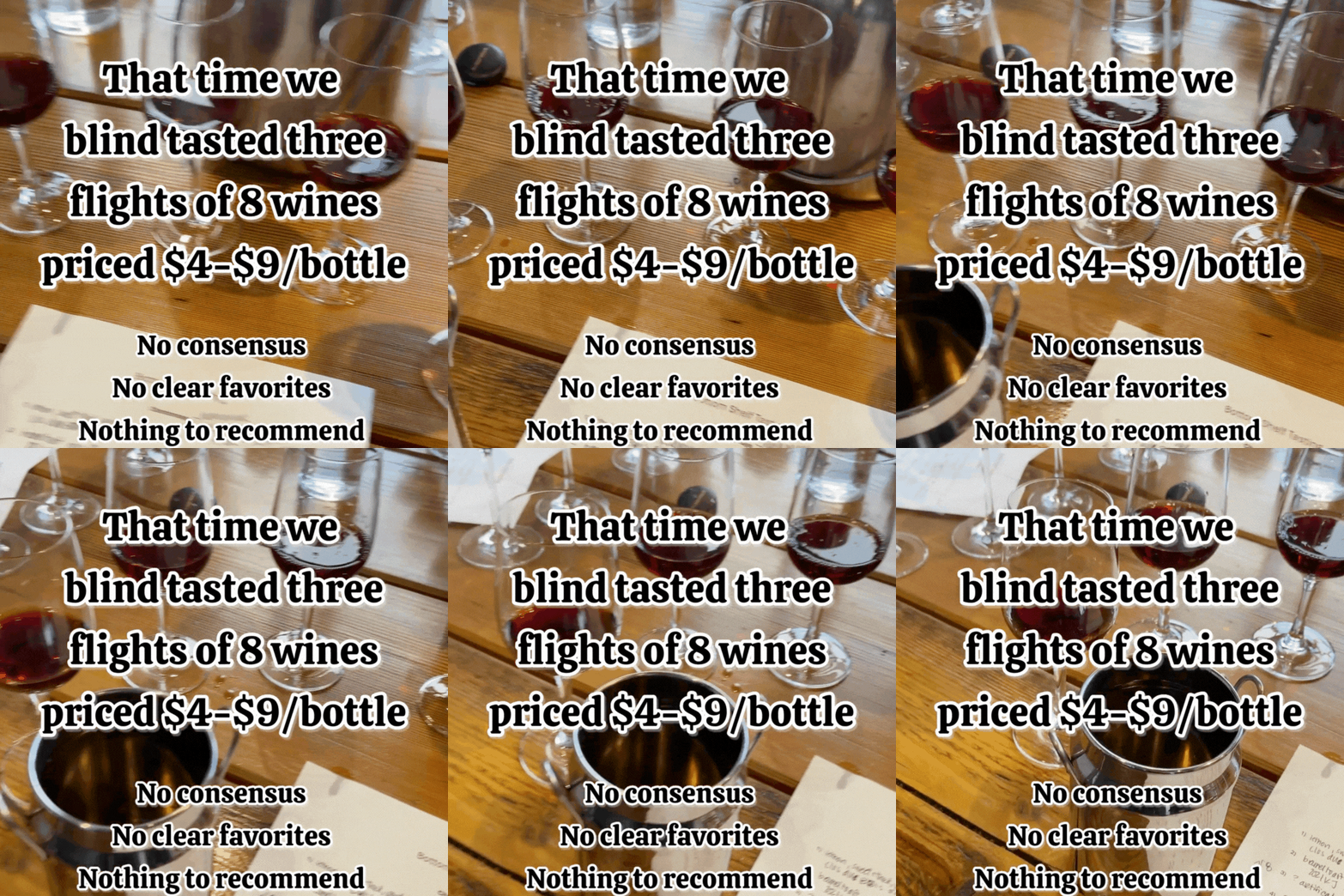
Last year, colleagues and I conducted a blind tasting of bottom shelf wines. We blind tasted 8 different chardonnays, pinot noirs, and cabernet sauvignons from the bottom shelf at the grocery store. We tasted a mix of 750’s and 1.5L formats (from both bottle and box). Nothing topped $10. None can be recommended.
a modest proposal
All this got me thinking about price point being the biggest barrier for new wine drinkers. Who wants to spend $70 on a bottle of pinot noir from someone you’ve never heard of, and heck, who knows if you even like pinot noir?! It’s a pickle. Unfortunately, Bruliam Wines isn’t positioned to make low price point wines, although I applaud colleagues who do them well. However, I can lower the price on my rose of pinot noir for a select subset of wine curious adventurers…

alas, it is illegal…
I floated my idea to my CF(n)O. How about dropping the price of my 2025 rose of pinot noir to $30 for any wine buyer under 30 years old. Just to be clear, I mean legal wine curious Gen Z’ers aged 21-30. Whelp; it’s illegal. Alcohol manufacturers cannot offer “incentives” to buy alcohol. (Although naturally I’d pay MORE money for wine if aforesaid winery flattered me into imagining I look younger than 30). This leaves me with a singular alternative- dropping the price of my 2025 rose of pinot noir to $30 for everyone. It’s a gamble. I need to sell most of it direct-to-consumer. I can’t afford to sell much wholesale to restaurants. But hey, maybe we can convince some Gen Z’ers to explore wine. It’s a public service.
hope (My Favorite Gen Z Wine Quote)
Despite the dark headline, Jancis’ recent article was actually quite uplifting. This is no surprise to me since I’ve always been a Jancis fan. Hopefully a new generation soon discovers her wisdom too. About Gen Z she writes, “The common perception is that young people are less interested in wine than their parents…But perhaps we just need to convince them to get off their phones and try a bit of offline socialising.”
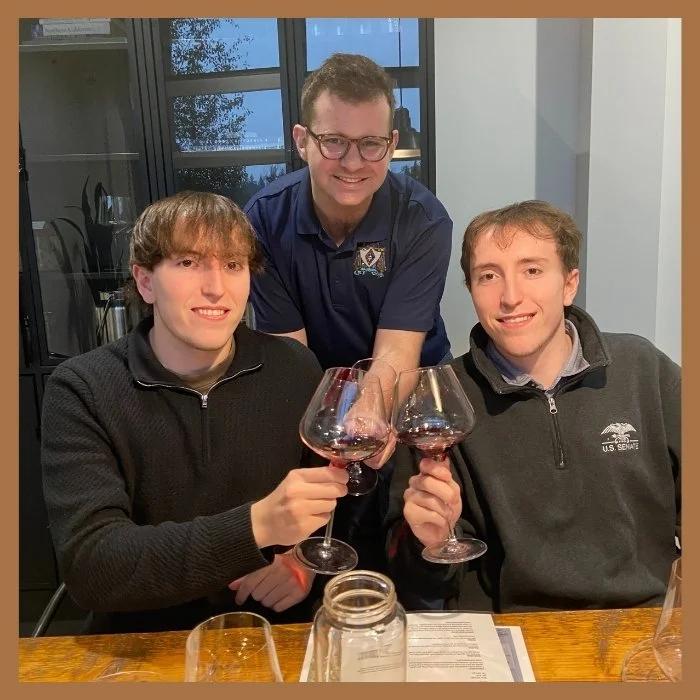
#bestlife
Offline socializing is the message du jour. Marketing tips from the California Wine Institute exhorts us to appeal to emotions. Wine marketing ought to promote community and togetherness. Uncork wine with friends; invite colleagues to share a glass; be neighborly & share your cellar. Lean into surprise. Engage your fans with insider information, hidden gems, and cool factoids. Connect with people. Validate what they taste and the wines they enjoy. Support diversity. Broaden the wine tent. Be relatable. Be funny. Be human. None of this sounds, like radical. It’s solid advice for relationship and brand building. Thinking on this, perhaps this not really the time for wine to “reinvent” itself. Instead, the wine industry should lean into what we do best, what we’ve always done: build connections.
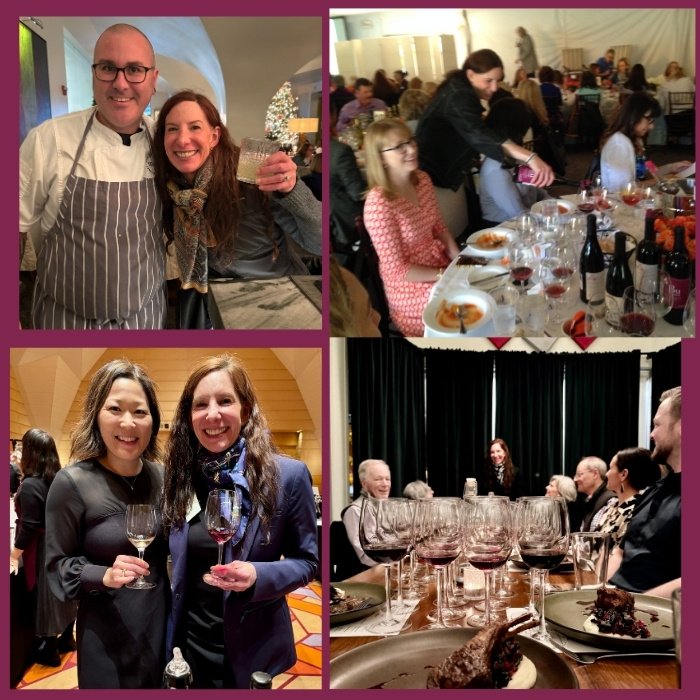
Journalist Erica Duecy says it best: “The opportunity ahead isn’t to make wine feel younger, louder, or trendier. It’s to make it feel relevant again.”
if you’re new around here
Welcome to Bruliam Wines. As a mailing list member, you’ll receive periodic winery updates from me, covering topics from harvest roundups to industry insights. I’m glad you’re here.
spring allocation drops in february
Stay tuned for information about and instructions for ordering your spring allocation. Still attached to an older vintage? Let me know. We love to accommodate special requests.
Happy New Year and warmest wished for a healthy, joyful 2026.