
Spring Sprung (like a month ago)
Spring Is My Favorite Season
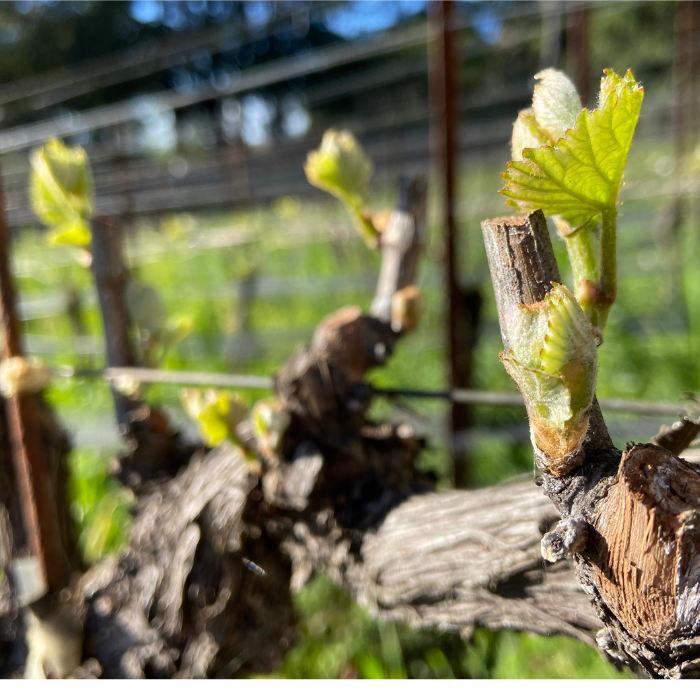
Budbreak 2026
I love the anticipation, energy, and hopefulness of budbreak. Nothing beats spying teeny, iridescent green shoots popping up around the county. The fledgling shoots are the heart of the vintage to come, all hopefulness, joy, and promise. #goodvibesonly.
cycle of the vine
The reassuring part of working in agriculture is that grapevines cycle through a predictable pattern of growth: budbreak > bloom > fruit set > veraison > ripening > harvest. Rinse & repeat. This is the romantic (& reassuring) part. Simultaneously, we growers have been recording data about aforesaid cycles, year over year over year. This stokes the flames of winegrower water cooler conversation. And we all have an opinion. And data. Reams and reams of data.
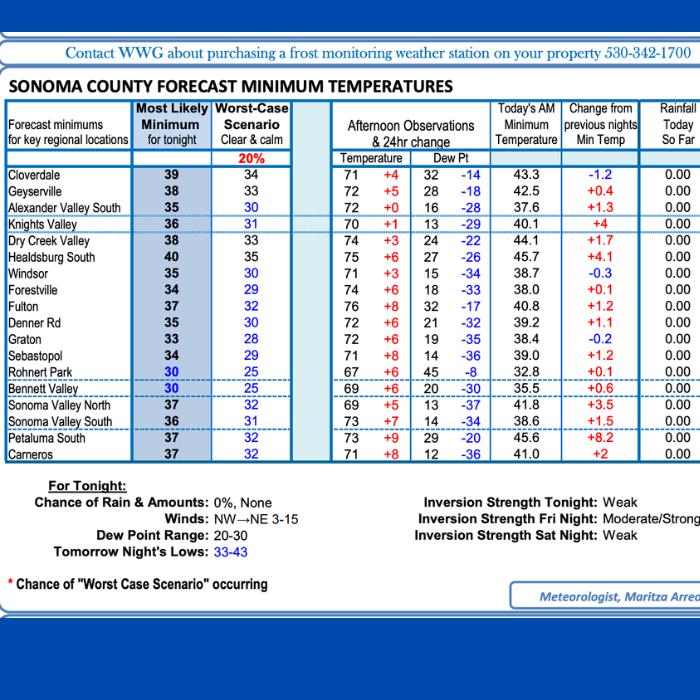
Frost report 4/16/26. Western Weather Group emails frost data every afternoon. They also issue a daily weather forecast + powdery mildew index every morning during the growing season.
hyperbole & hot takes
Every harvest (& this will be my 18th), I cross paths with some old timer who dredges up historical data so old it undermines the boundaries of credulity. “22 inches of rain. We haven’t seen that much rain since ’97.” “We haven’t had yields like this since ’82.” Sounds dramatic; I’m circumspect.
but also overheard
And yet, across back to back IMP meetings in Russian River Valley and then Alexander Valley, I keep hearing the same news. ‘We are seeing chardonnay bloom, a month early.” And “canopy growth at the end of March looks more like May.” Or “this vintage ‘shot out of a cannon.’” A well-known grocery store brand is seeing chardonnay bloom now; their “typical” bloom is late May. “We’re moving wires already,” remarked one grower. “We’ve moved ‘em twice,” countered another.
Last week, when Santa Lucia Highlands winemakers and winegrowers gathered for our inaugural technical seminar, the buzz was all about vintage 2026’s early arrival. (But we also had fun just being social).

Kerith is the back left corner!
an early harvest
All indications point to an early harvest. In my excitement for budbreak, I reliably document dates of Torrey Hill’s very first shoots. This date is not representative of the vineyard as a whole, only the two or three vines that pop first. So do consider this data in context. 2015 was notoriously early, hastened by a warm summer and a small crop load that galloped to the finish. 2015 budbreak at Torrey Hill: March 8 (20% ish). In 2020, I captured a single bud on March 2nd. 2022 was also early, when I documented budbreak on March 7th. This year I documented the start of budbreak on March 3rd. Longtime grower John Bucher documented his March 10th budbreak on Instagram. Sonoma County Winegrowers celebrated budbreak on March 12. So yeah, we are tiptoeing into “early” territory.
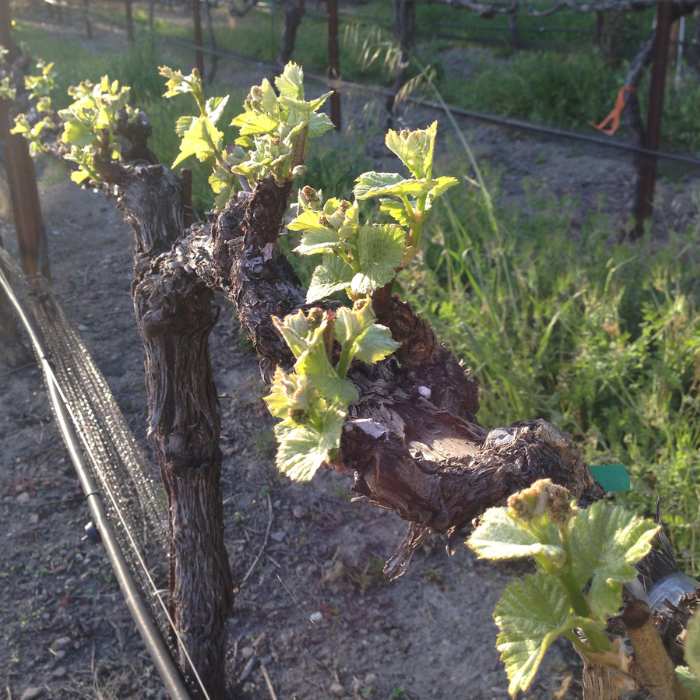
March 8, 2015: past budbreak & onto 1-2 inch shoots
good vibes only

Photo by Brian
Legacy grower Steve Sangiacomo offered up wisdom and eternal optimism when asked about harvest 2026:
“2026 is off to a great start! Mild and warm weather has kickstarted the vintage to be on the early side which will allow us so more wiggle room in case we get a very cool summer like last year. We got a nice shot of spring rain which will delay our irrigations and help us better manage vine health and proper canopy management. Obviously, a long way to go but excited to see how the season progresses!”
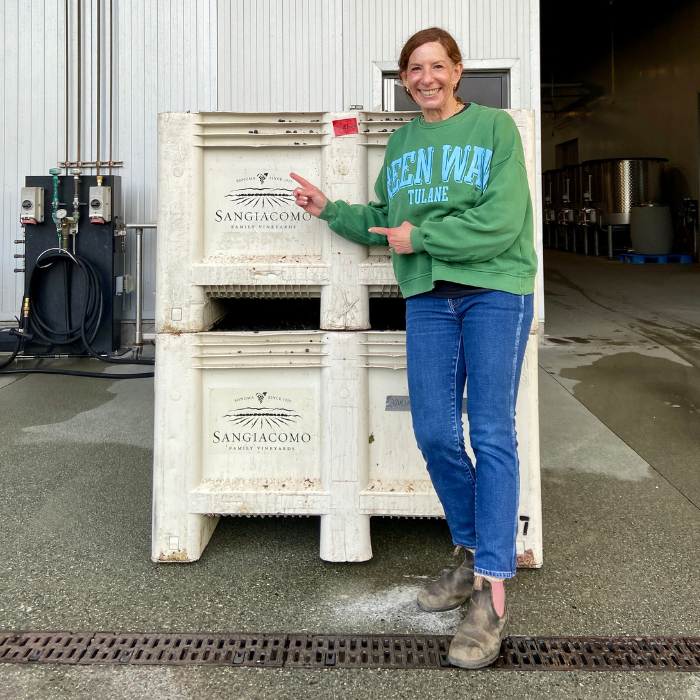
I anticipate any fruit from the Sangiacomo team will be exquisite. My 2023 Sangiacomo Roberts Road pinot just scored 93 from James Sucking. The newly released 2024 Sangiacomo scored 91 from Vinous. But hey, this blog post isn’t about me; it’s about springtime in the vineyard, and the ‘26 vintage that longtime winemaker Adam Lee is calling “an exceptionally early harvest.”
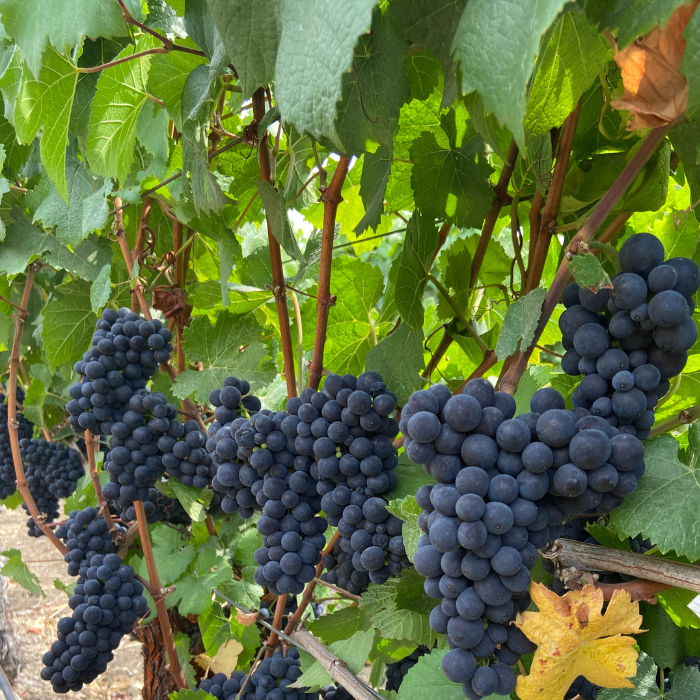
Sangiacomo Roberts Road clone 115
and speaking of canopy management
Dr. Steve Price, longtime viticulturalist and plant researcher at Oregon State University presented at our recent SLH pinot forum. He shared data from his experimental vineyard. Apparently, aggressively top hedging pinot vines can drop sugar accumulation by 2 brix (!). That’s one way to slow down an early harvest. Guess I don’t have to feel bad about snapping a cane last week, while tucking exuberant vines into wires.
whether you track weather in march or april matters
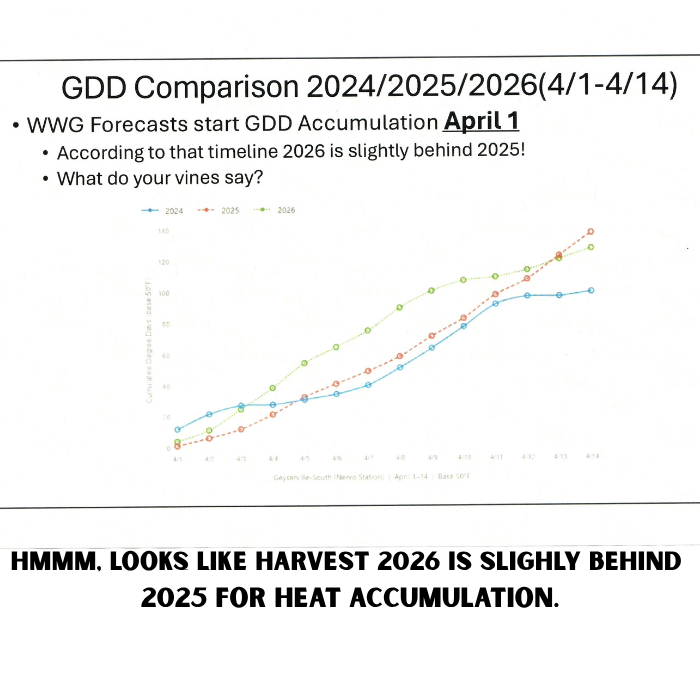
What does the data say? Our out-of-the-box Sonoma County grower degree day counter “opens” tracking on April 1. Comparing the first two weeks of April 2026 to vintages 2024 and 2025, this year tracks slightly behind 2025 in GDD. This contradicts all the hearsay and stories percolating around the water cooler (although percolating “around the spray rig” may be the more apt preposition).
but we don’t farm by the calendar
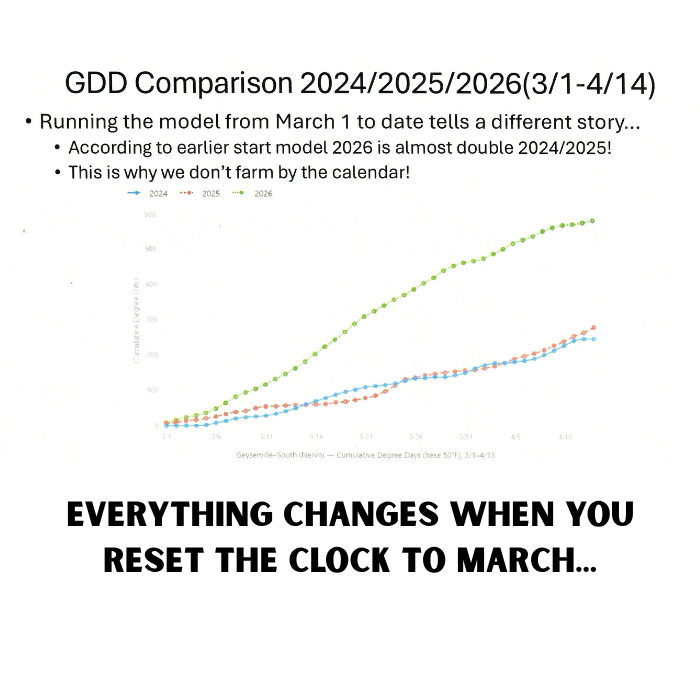
March was hot. Hot, hot, hot, with some days in the warmest part of the county kissing 90 degrees. That’s unusual. So to tell the story of vintage ’26 requires turning back the clock and updating the model. When we consider GDD starting March 1, we’ve accumulated almost twice the GDD in 2026 as compared to 2024 and 2025. So yeah, the data also bears out an early start to harvest 2026.
looking ahead
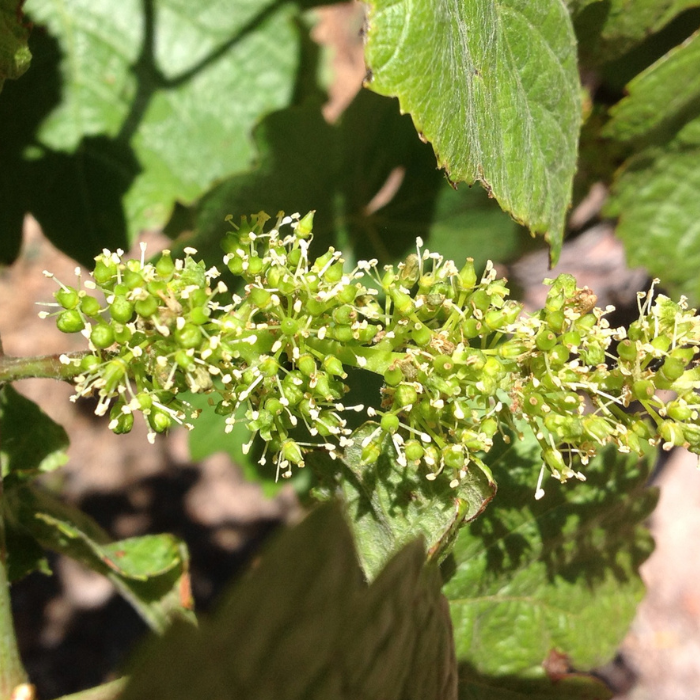
Bloom: Torrey Hill 2013
Fruit set follows bloom. Grapevines are self-pollinating, so we don’t rely on bees or pollinators. The (male) anthers simply tip their pollen into the pollen tube, hoping pollen grains reach the (female) ovary and ovules. Fertilization generates a seed and ultimately results in a grape berry.
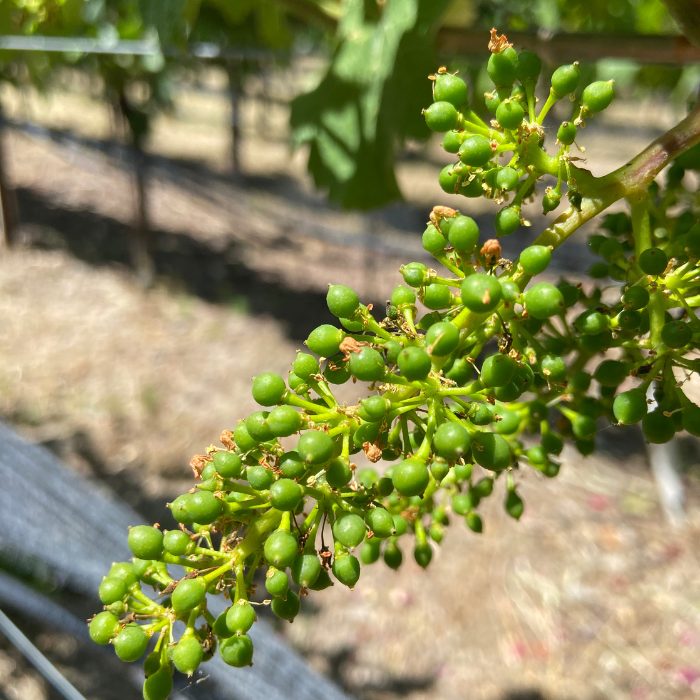
Early fruit set Torrey Hill: May 24, 2025
Plant scientist Dr. Ashaf Al Kereamy reminds us that the most critical factors affecting bloom and fruit set are weather, weather, and weather. “Temperature is an important factor in germination and growth of the pollen tube,” he notes. “Fruit set is greatly reduced when temperatures fall below 65F or exceed 100F.” Sunshine is ideal. Cold, rainfall, grey cloudy days, and even high humidity can reduce fruit set. Sometimes it’s mechanical, like when the dried calyptra gets stuck (“incomplete detachment’), so pollen disbursement is hindered. Other times, grey weather halts vine phenology. For example, if the ovary gets fertilized but aborts, grapevines set “chicks and hens” rather than uniform clusters.
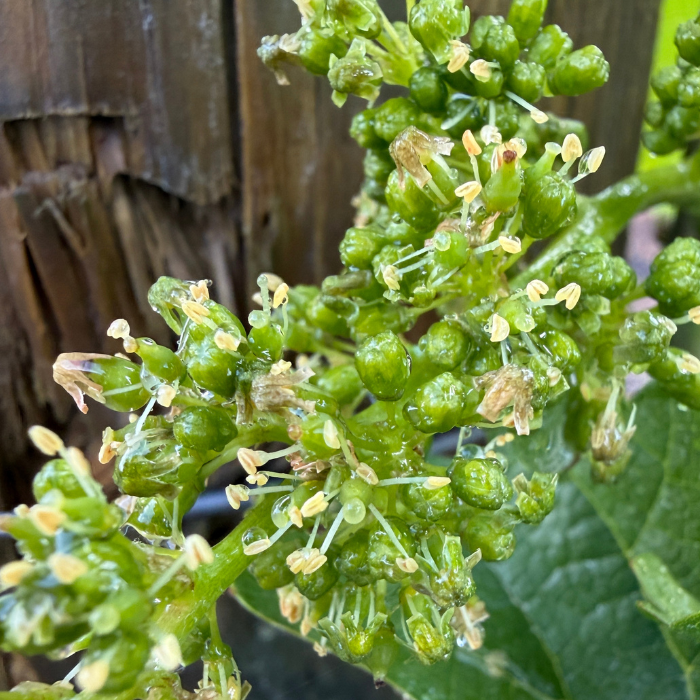
The cap (top & mid left) dehydrates & detaches, allowing male anthers to spring forth & disseminate pollen.
what about rain?
It’s no secret we saw rain last week (April 10-12), with more in the forecast ahead. We like rain. It beats drought and lessens on our dependence on irrigation. But like everything in life, timing is everything. I first spied flowering here at Torrey Hill around April 8 or 9th. Granted, this flowering represents rare instances, < 1% of the vineyard.
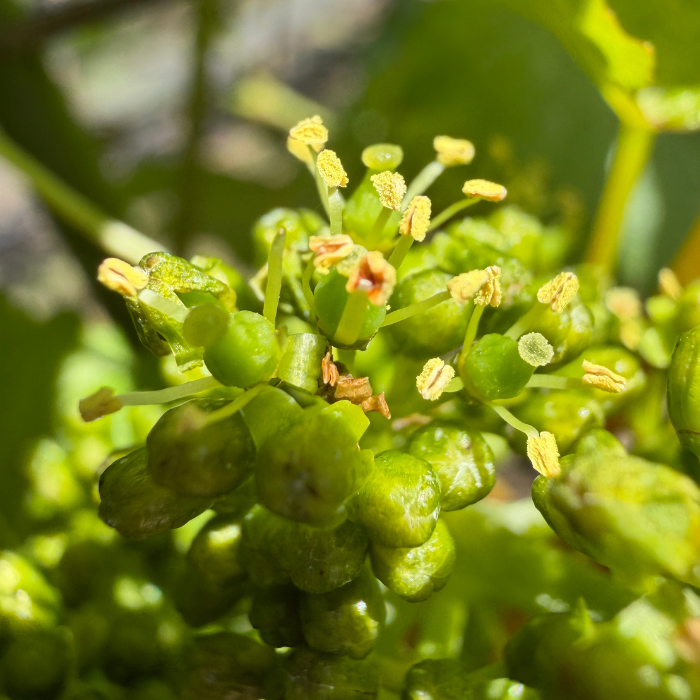
Capturing flowering in the vineyard requires a heavy iphone zoom. (4/10/26)
Luckily, most clusters remain closed and look like this.
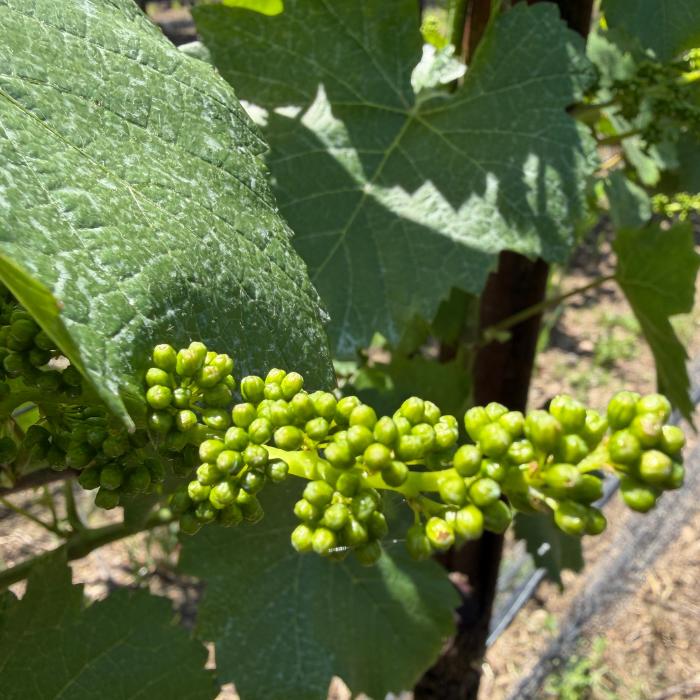
A future grape cluster, pre-flowering
But as an anxious human, I can’t help but wonder, “Should I freak out?”
hey steve, should i freak out?
To allay my angst, I reached out to longtime and exceptionally knowledgeable grower Steve McIntyre. He’s humble, so here I’ll emphasize “longtime” (as in he has been farming his eponymous vineyard since ’87 and was 5 years a winemaker at Smith & Hook before that) and “knowledgeable” (as in he farms/manages over 16,000 acres). Always even-keeled, he replied:
“Frequently, I’m asked if springtime precipitation negatively affects grapevines during bloom and fruit set. Fortunately, rainfall does not negatively affect bloom or fruit set, but cool temperatures and overcast skies certainly can. Grapevines live in the present and adjust their crop accordingly. If it’s cool and overcast, they’ll set fewer berries thinking current conditions will persist in the future, and they won’t be able to ripen a larger crop before they go dormant in the fall.”
Whew! If grapevines “live in the present,” mine certainly are relishing today’s sunshine and moderate warmth.
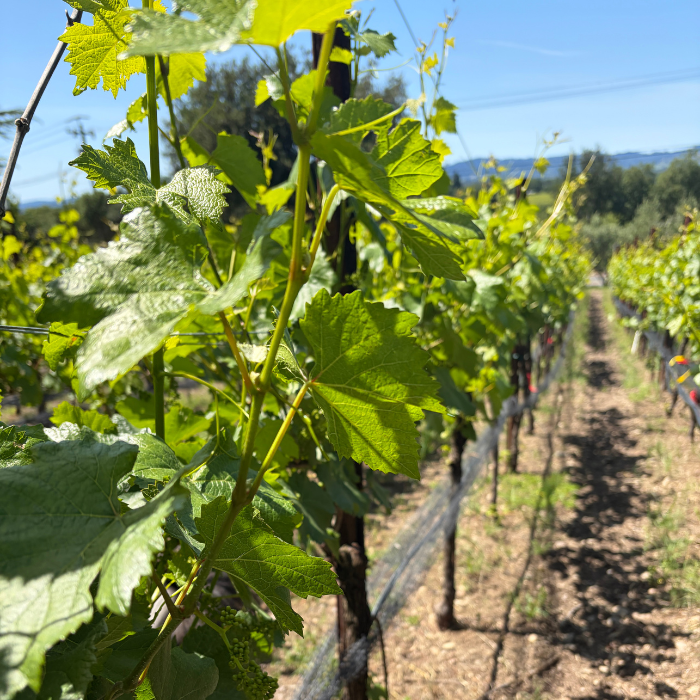
Happy Vines. Sunny Skies. Torrey Hill 4/16/26
looking ahead
Nobody can predict Mother Nature. But pinot noir herself is an old-timer, cultivated since at least the Roman Empire. And over thousands of years, she has perfected her own internal timetable. In general, for pinot noir, the interval from fruit set to harvest lasts about 110 days. Last week’s rain and cooler weather has certainly slowed the progression of bloom here at Torrey Hill. But once bloom tips into fruit set, game on!
new around here?
Welcome! For the first time, well, ever, we are offering wine for purchase on the website. If you’re new to Bruliam Wines, check it out.
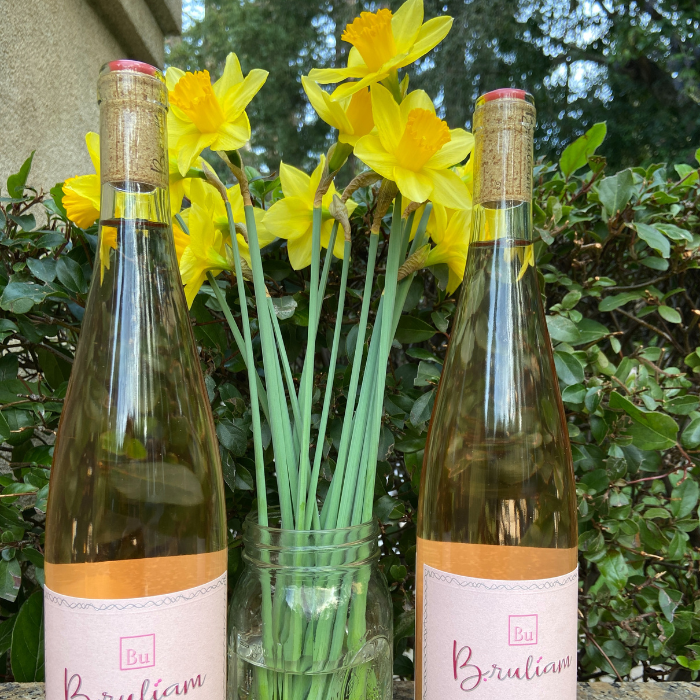
Feeing Spring-y