
How to Make Wine (A Step-by-Step Picture Guide)
GRATITUDE (& HOUSEKEEPING)
Thank you to everyone who supported our recent 2026 Fall Allocation. The allocation period is now closed.
If you’ve already made arrangements to ship your wine on a specific day, your wine will ship as planned. Otherwise, please note your wines will ship the week of October 12. Is your neighborhood still toasty warm mid-October? No problem. Please email me to delay shipping.
BACK TO BASICS
If you’re new around here, welcome! If you’ve been here a while, thank you for your continued support. For longtime blog readers, this post may constitute review. Nonetheless, it’s been a while since we’ve revisited the basics of winemaking. In retrospect, I probably should have posted this BEFORE harvest. But bottling day slid into harvest which snowballed into the fall allocation. But since we’re here now, let’s get into it.
HARVEST IS MY FAVORITE SEASON
Let’s make some wine.
STEP 1: START WITH GRAPES
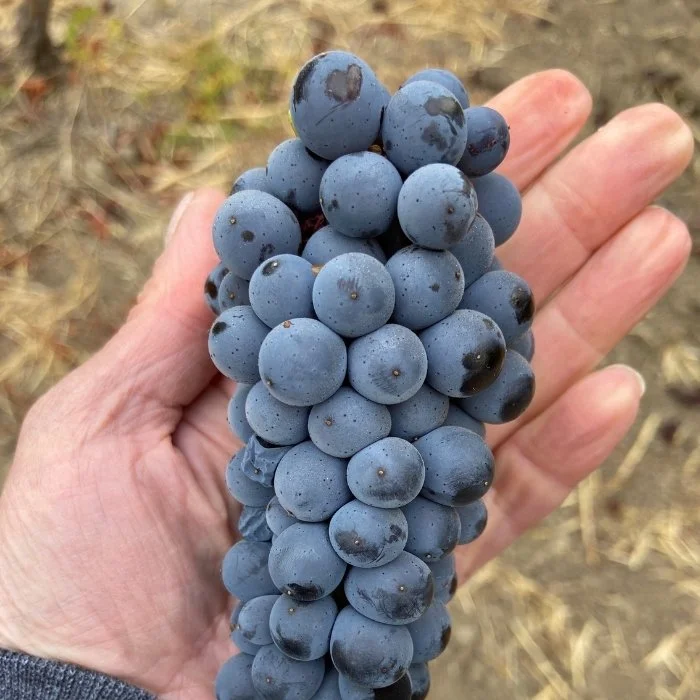
Winemaking is farming, so find a farmer you can trust. Start with the best grapes from the best vineyards in the best wine growing regions.
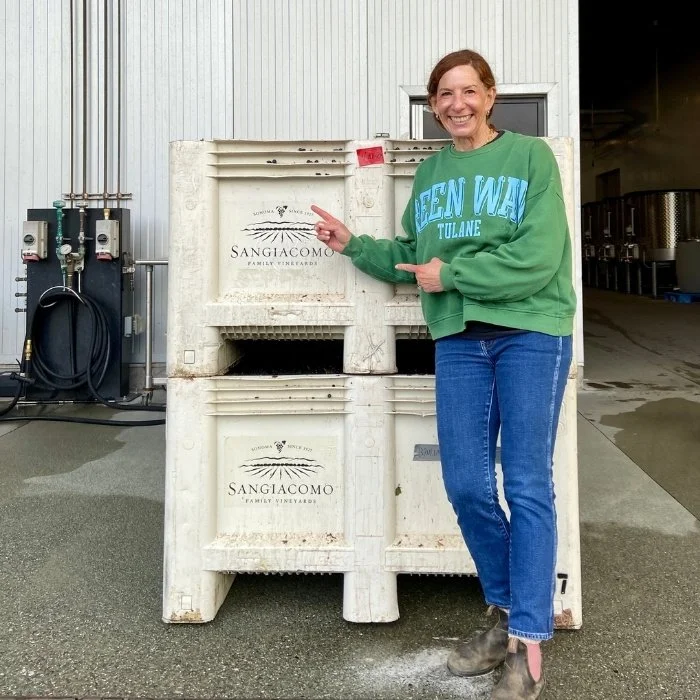
The best wine growers deliver your fruit early, cold, and in slack filled bins to minimize smushing en route.
STEP 2: SORT GRAPES (ALTHOUGH THIS IS OPTIONAL)
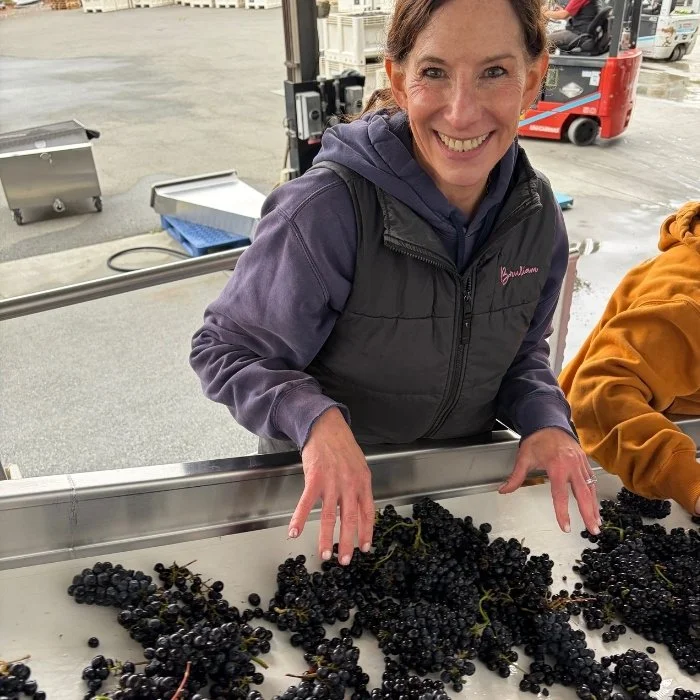
Hand sorting grapes. Many hands makes for quick(er) work.
We sort out leaves, under-ripe clusters, raisins, rot, and “MOG” (material other than grape, which includes but is not limited to stunned lizards, rocks, or the occasional plastic vineyard tag). Again, find a farmer your trust. Starting with clean fruit expedites sorting.
I sometimes (but not always) sort my chardonnay. It depends on growing conditions and the growing season. Most often, I just dump the whole bin straight into the hopper.
THIS GETS TRICKY - WHITE (W) VS. RED (R)
With white winemaking we press the grapes FIRST. Then we compost the spent grapes & ferment the juice. With red winemaking we drop whole (intact) grapes into the tank and ferment the fruit. Fermentation and cap management release the juice. With red winemaking, we press the grapes LAST.
STEP 3 (W): LET’S MAKE CHARDONNAY (REMEMBER PRESS GRAPES FIRST)
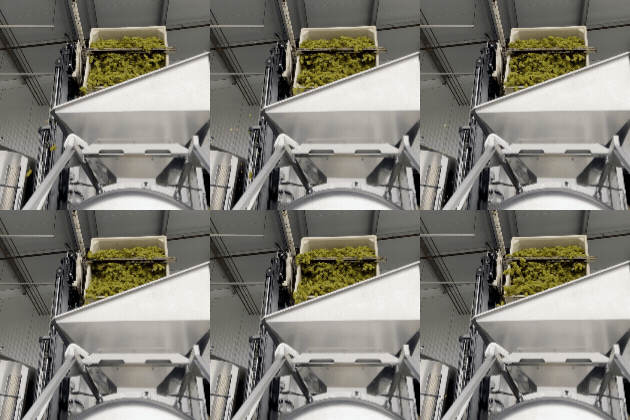
White wine - press grapes first. Loading (unsorted) grapes into the press.
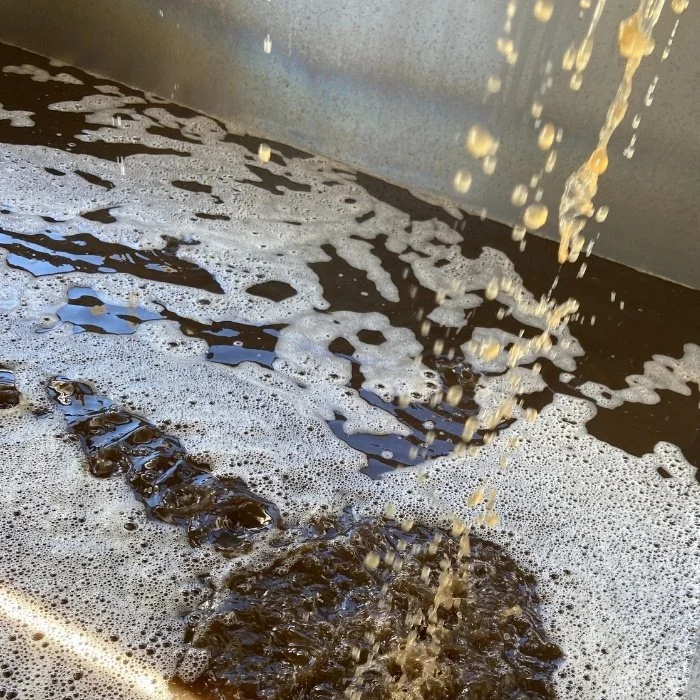
Juice extracted from the grapes collects in the press pan below the press.
As grapes are squeezed, the grape juice collects in the press pan underneath the press. We protect the juice with dry ice and then pump it into a tank for cold settling.
STEP 4 (W): BARREL DOWN CHARDONNAY JUICE
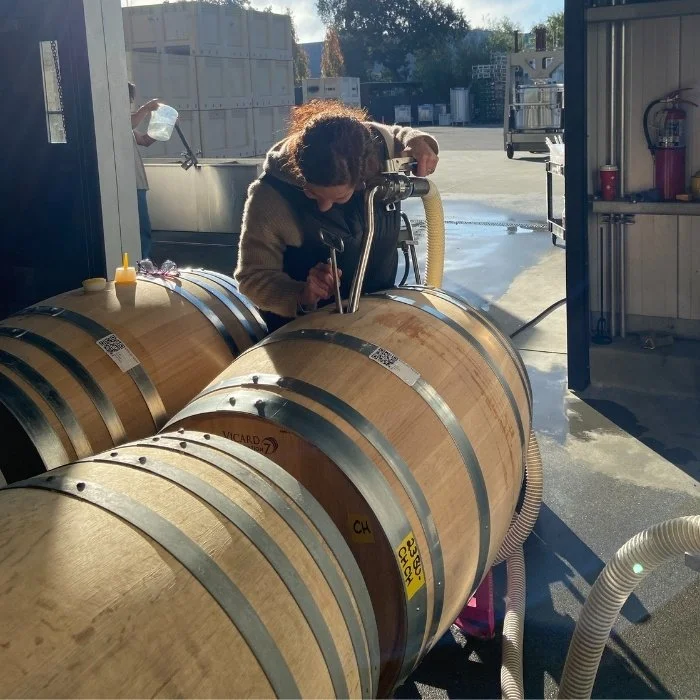
The measuring stick is calibrated on one side for BG barrels and on the other for BDX barrels. Nifty, right?
DON’T OVERFILL THE BARRELS
A full barrel holds about 60 gallons. For fermentation, I fill barrels to about 45 gallons. This dead space contains the gurgling, bubbling exuberant fermenting juice without risking a chardonnay volcano. Plus the carbon dioxide released during fermentation protects the juice from oxidation. Once fermentation nears completion (& slows down), I can top the barrels full.
STEP 5 (W): ADD YEAST (OR NOT)
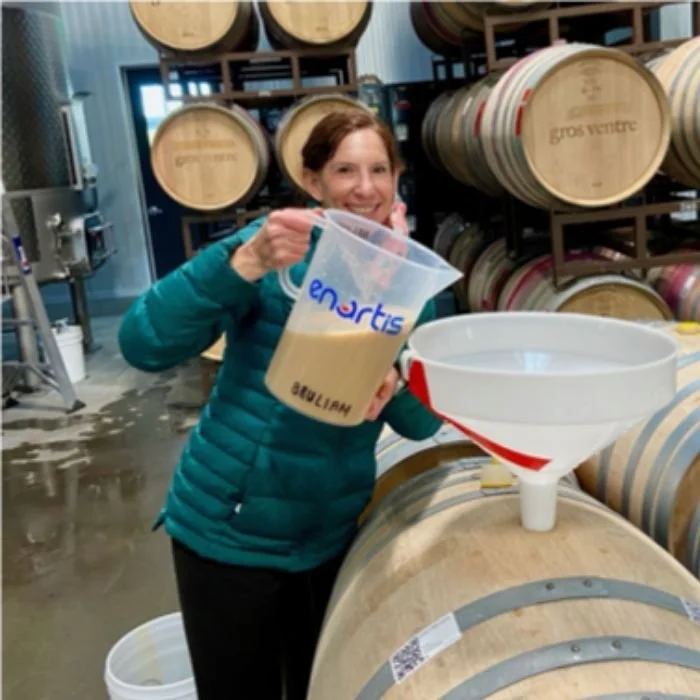
I have an anxious personality. I inoculate my chardonnay barrels.
STEP 6 (W): WHITE WINEMAKERS: DO NOT PASS GO. PROCEED STRAIGHT TO… ELEVAGE
This is not entirely true, since we still need to tackle malo-lactic fermentation. But since secondary fermentation happens in barrel, white & red winemaking can converge here at post fermentation elevage (aka “wine aging in barrel”).
LET’S CIRCLE BACK TO RED WINEMAKING
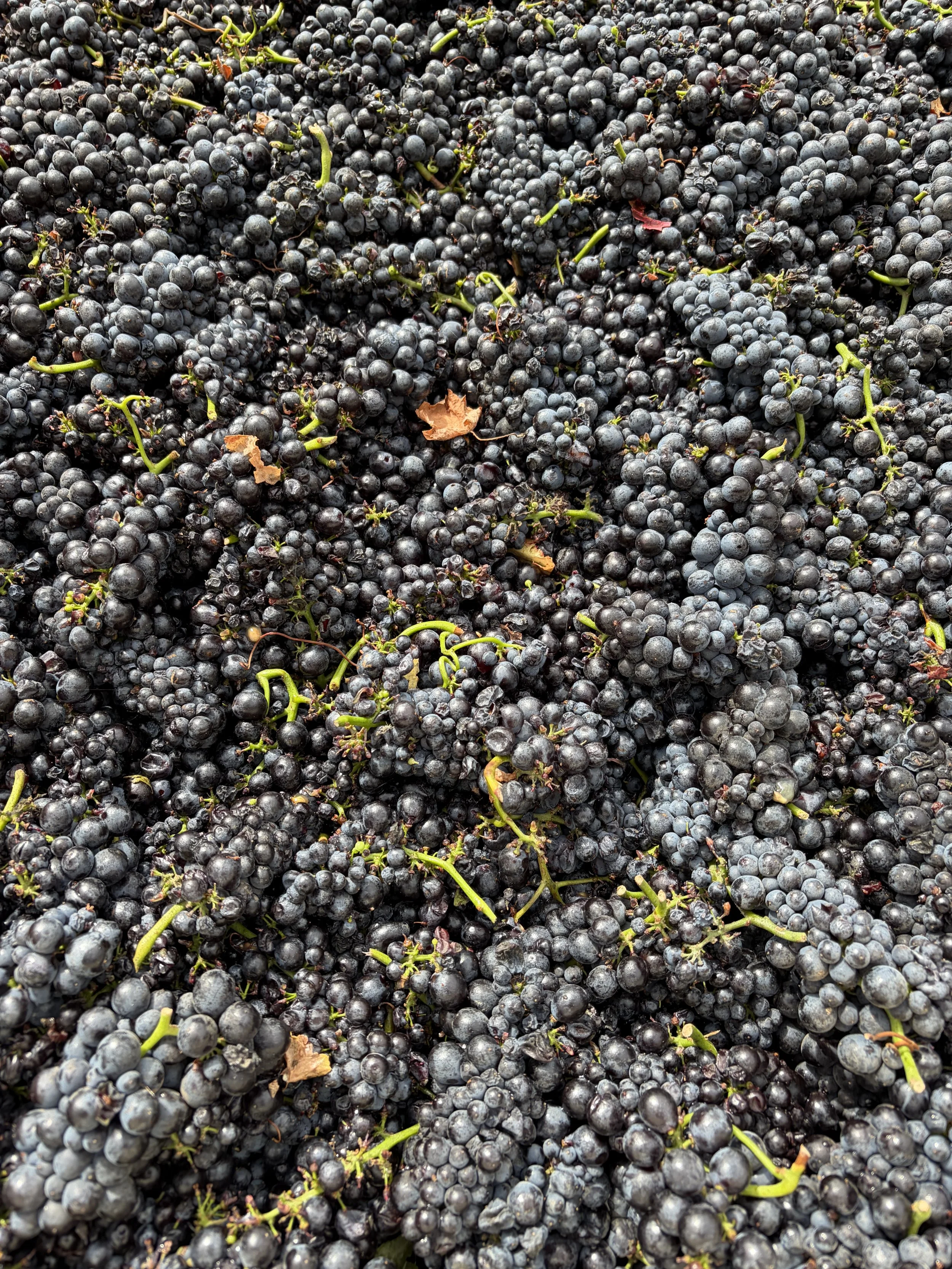
Remember with red winemaking, the grapes start in the tank FIRST & conclude with pressing LAST.
STEP 3 (R): PUT GRAPES INTO A TANK & ADD YEAST (OR NOT)
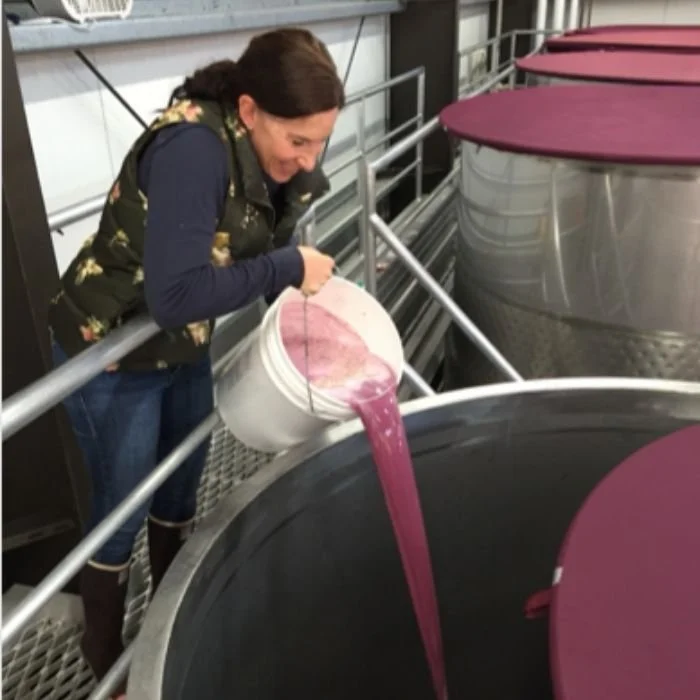
Plastic bucket? Check! Rubber boots? Check! This is a high tech operation.
Typically, when I am ready to initiate fermentation, I warm the tank overnight. Warmth + ripe, healthy, intentionally-farmed grapes is enough to initiate a native fermentation. Once a cap forms and fermentation begins, I add my yeast. In 18 years of winemaking, I have completed native fermentations. But I am anxious control freak. That’s just my personality. So inoculated fermentations are simply less stressful for me. Plus yeast is cool. Yeast fermentation kinetics is my jam!
STEP 4 (R): CAP MANAGEMENT
I wanted to explain winemaking with pictures, keeping it light. But now I must tiptoe briefly into fermentation chemistry. I’m sorry. Please don’t leave now. This will be fast and painless.
IT’S JUST LIKE BREAD RISING (BUT JUCIER)
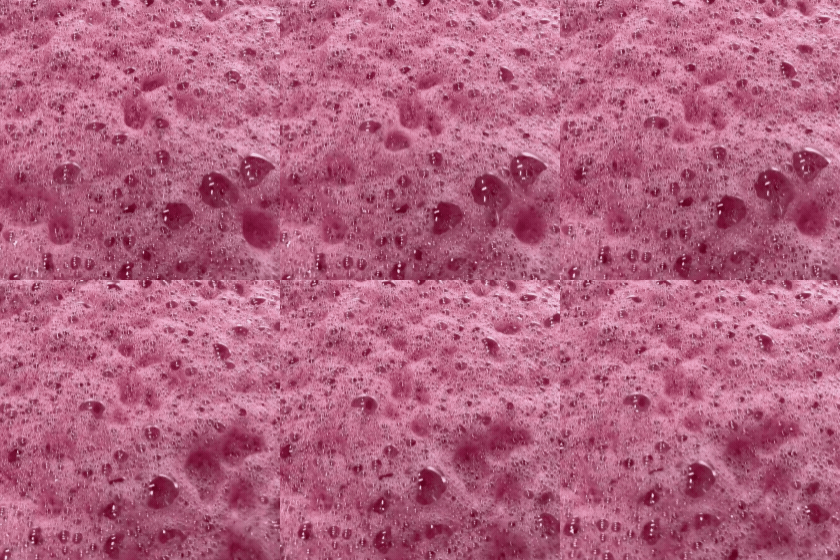
OMG! Behold my happy burbling yeast.
Yeast consume sugar and convert juice to wine. This process generates carbon dioxide. (This is the same process that speckles your artisan bread with those yummy, craggy holes). The carbon dioxide pushes the morass of grapes to the top of the tank. Our job as winemakers is to mix, mix, and re-mix that churning, gurgling tank, keeping the juice in contact with the grapes as much as possible. This process is called “cap management.” Cap management falls into two basic categories.
The PUNCH DOWN
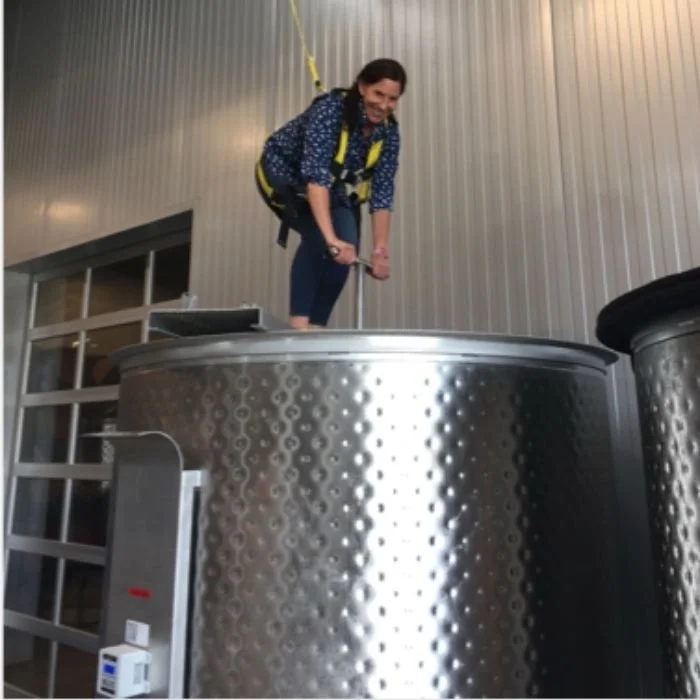
A punchdown is best described as tank scaled whack-a-mole.
At the peak of fermentation (which happens to be called the “log phase”), the egress of CO2 is so robust it pushes the grapes back to the surface as soon as you submerge them into the juice. It’s hot, sweaty business.
THE PUMPOVER
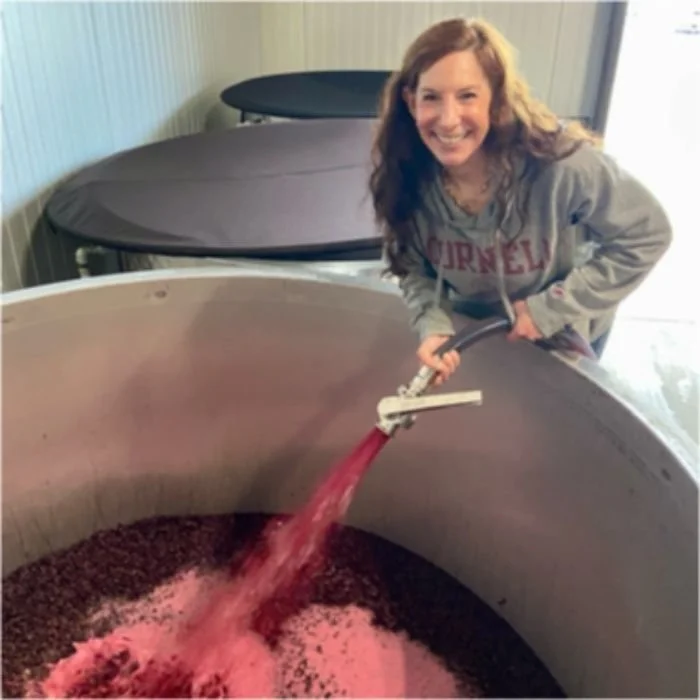
Hook a pump to the racking valve and spray the wine back over the top of the tank. Pumpover offers more aeration. A punchdown provides maceration. Both pieces are components of a healthy fermentation.
That’s like a basic pump over. If you want to be extra, you can do an aerated pump over. Is this pump-over maaaaaxing??!
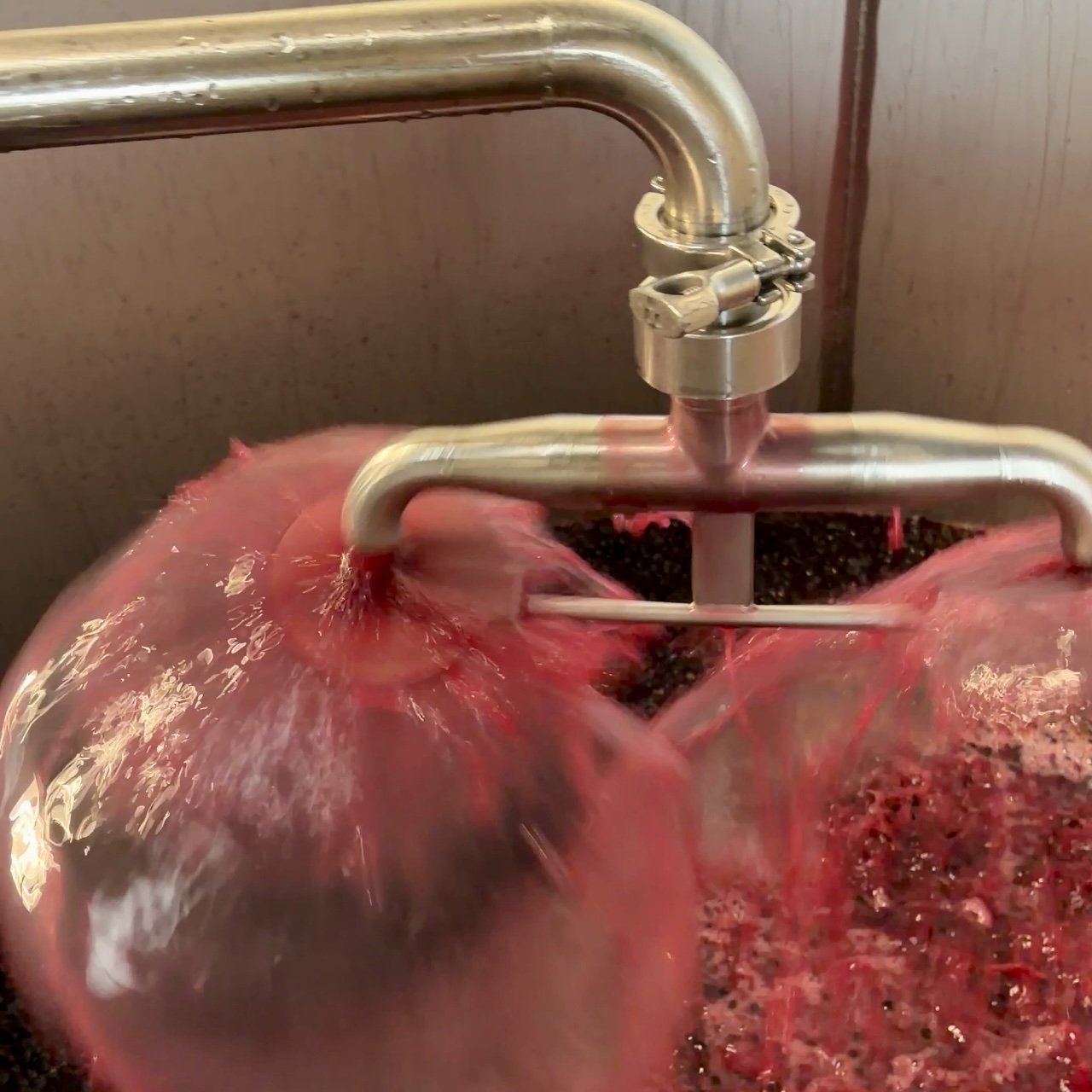
“Look at this stuff. Isn’t it neat? Wouldn’t you think my collection’s complete? Wouldn't ya think I'm the girl, the girl who has everything?” Like literally. Every. Single. Toy. Wanna do a sump & sieve aerated pumpover. Be extra, extra.
STEP 5 (R): DRAIN THE TANK; FILL SOME BARRELS
When the fun of fermentation is complete, it’s time to drain the tank. The just-born-baby-wine needs to live somewhere, so how about we fill some French oak barrels?
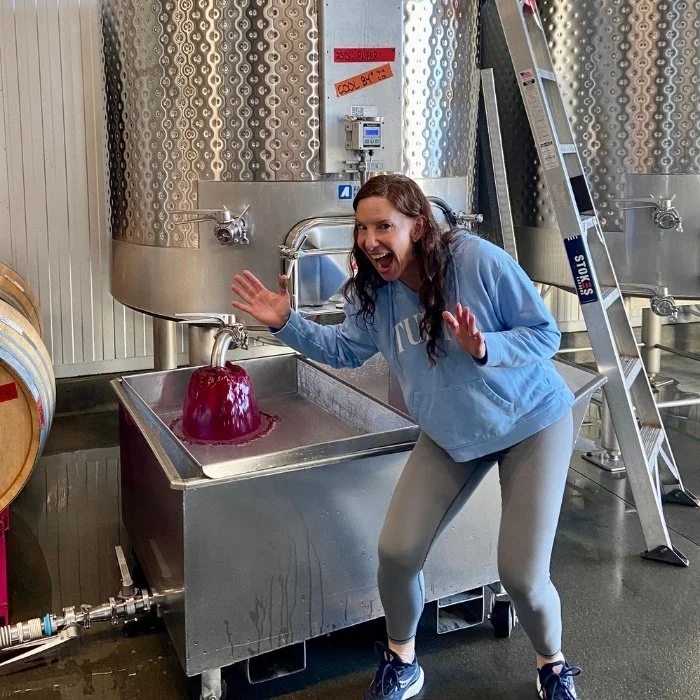
Drain the tank into a sump. Hook a pump to the sump. Attach barrel wand to the hose. Fill barrels with ease.
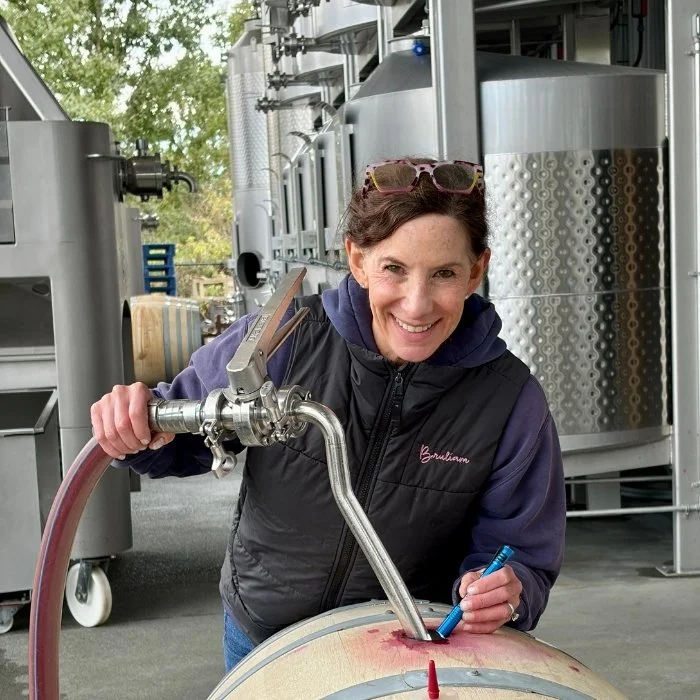
Filling barrels with red wine.
OK, NOW WHAT?
After you’ve drained the tank, you’re left with a big, sloppy, juicy pile of wet grapes.
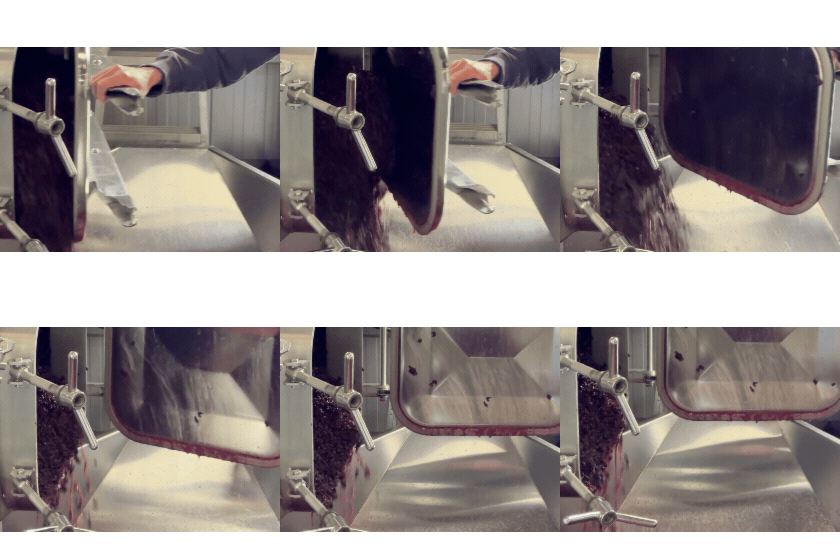
Open the door of the tank and…
LET’S GET READY TO RUUUUUMBLE? WAIT. NO. SHOVEL. GET READY TO SHOVEL
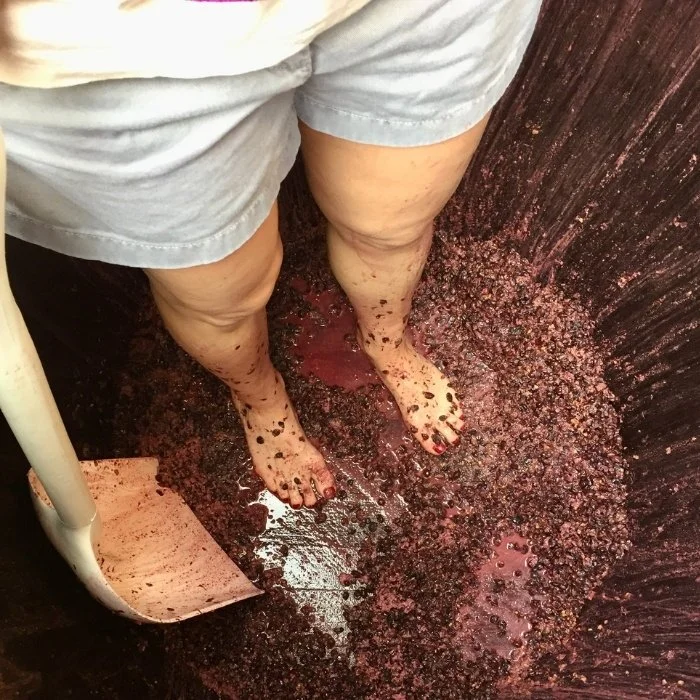
Sometimes, you have to get into the tank in order to shovel it out.
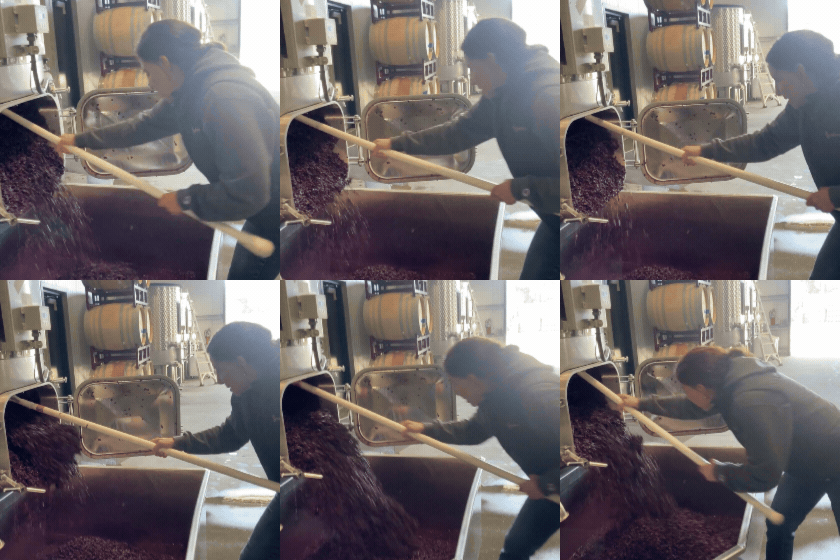
I can shovel the big tanks from the outside.
STEP 6 (R): FINALLY! PRESSING RED GRAPES IS THE LAST STEP
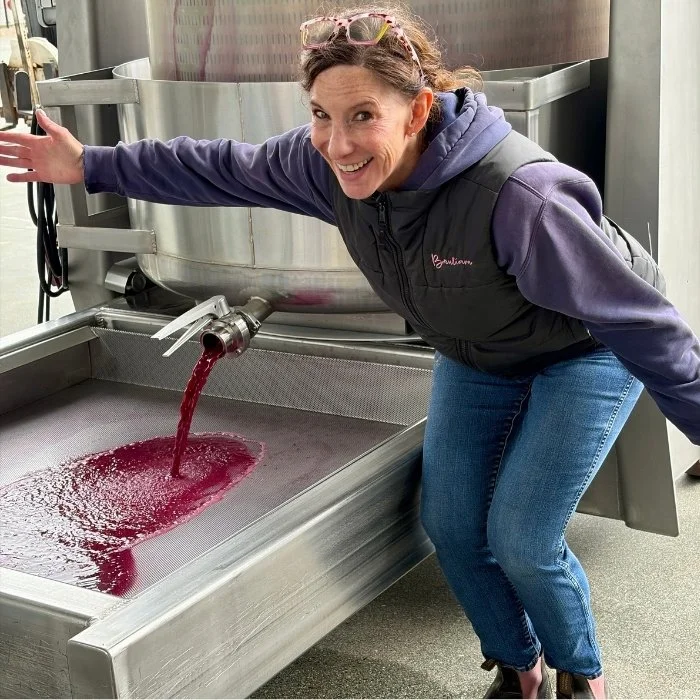
I know. You feel it, too. Only Ariel can convey my exuberance. “Look at this trove, treasures untold How many wonders can one cavern hold?” Yes, I love me a good basket press.
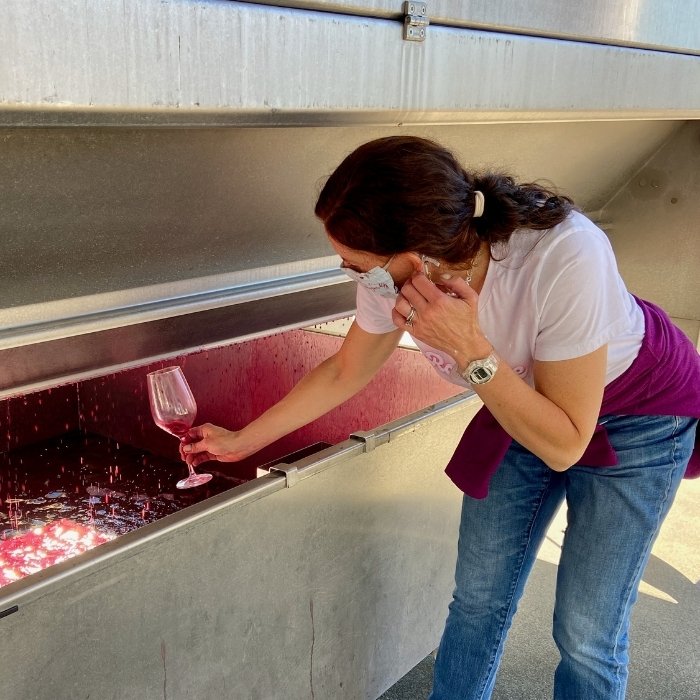
Sampling press fractions.
I sample each press fraction as the pressure ramps up and squeezes out more juice. If the wine tastes delicious, it flows into a barrel. If it ever starts to taste bitter, I cut the press and discard that press fraction. Quality over quantity.
ELEVAGE - WHERE RED & WHITE WINEMAKING CONVERGE
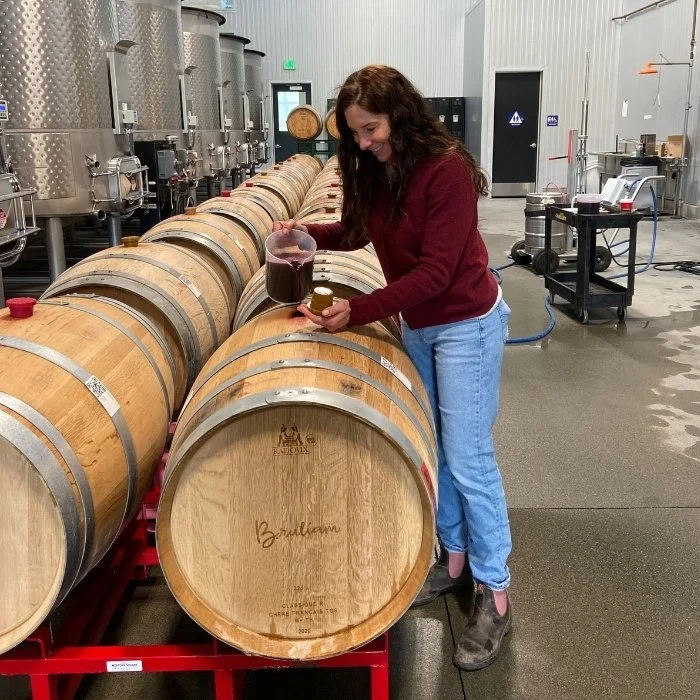
Topping barrels
Elevage is French for “raising,” as in “bringing up,” like a child. The wine matures in barrels until bottling day. Since wood is porous and wine evaporates, we need to refill the barrels periodically. This is called “topping.”
BOTTLING PREP
In advance of bottling day, we need to blend all of the barrels into a composite mix. So now we need to reverse the steps of harvest. This time, we rack the wine OUT of the barrels and into a tank.
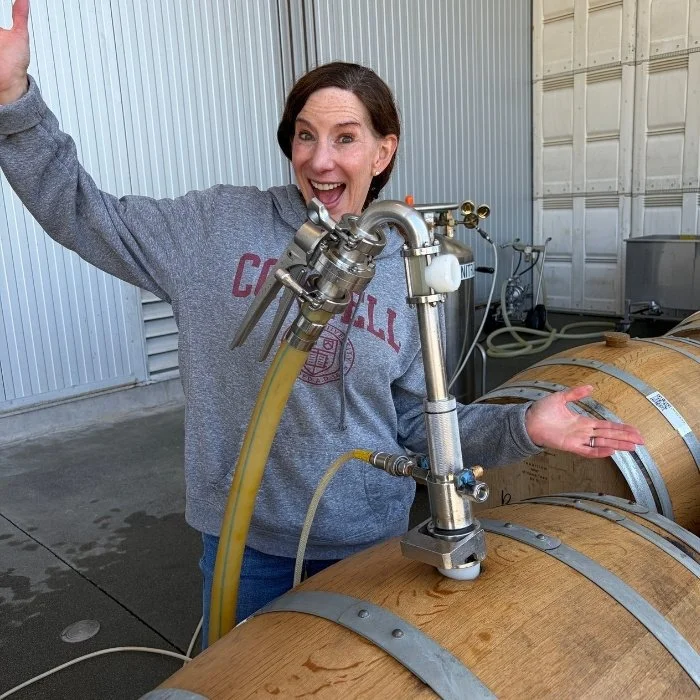
Pumps hooked up to nitrogen gas allow us to suck wine out of the barrels and push it into a tank.
BOTTLING DAY
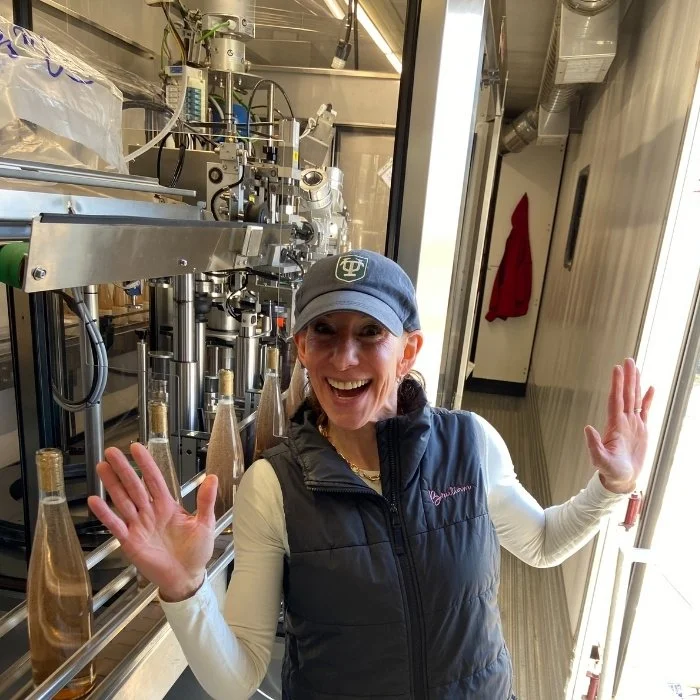
Here I am on the bottling line, bottling the 2025 rose of pinot noir.
TIME TO RELAX WITH A GLASS OF WINE
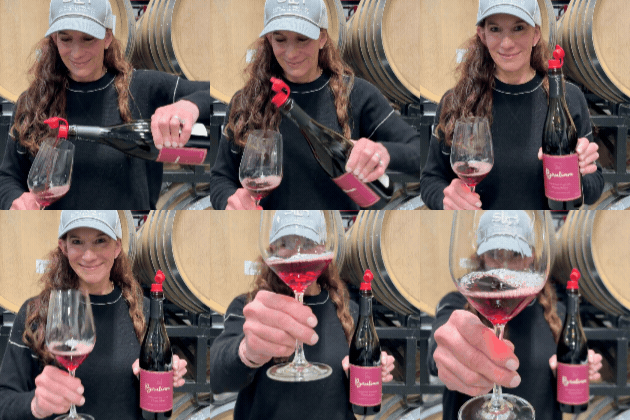
Here’s to you (for making it to the end of this post).
WHEW! THAT WAS A LOT…
We covered a lot of ground here. But that’s cool because harvest is my favorite season. If you have specific winemaking questions, please email me and ask. I love (like really, really LOVE!) to talk shop.
WHAT ELSE?
Thank you, always.
Check your calendar & confirm your local weather in advance of October shipping.
And don’t forget to say hi if you’re in Sonoma.